
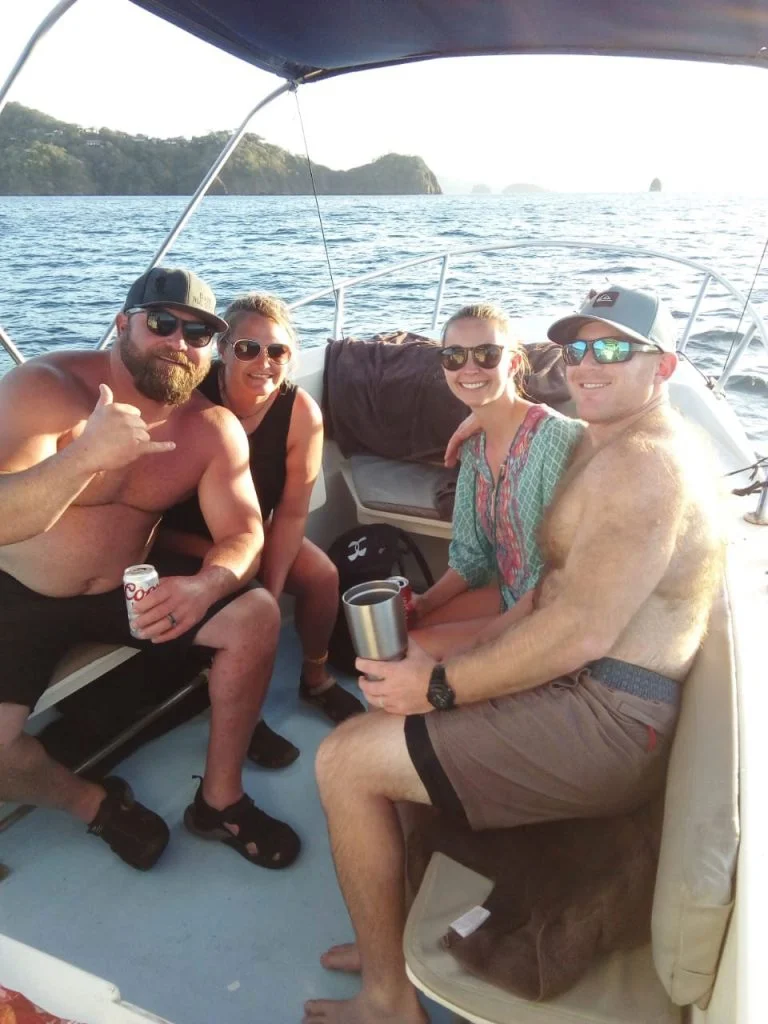
The Gulf of Papagayo is one of the most biologically rich corners of the eastern Pacific. The fishing is exceptional. But the peninsula itself is worth exploring beyond the dock — white sand beaches, dry tropical forest, and the kind of quiet that’s getting rare on the Costa Rican coast.
Here’s what else to do when you’re not on the water.
The Beaches
Playa Panamá is the main beach inside the gulf — calm, protected, and ideal for swimming. The bay is where most charter boats operate from, and the shallow turquoise water inside the breakwater is perfect for families. Arrive early to get a spot with shade.
Playa Hermosa (not the one near Jacó — Guanacaste’s Playa Hermosa) is a longer crescent beach 10 minutes south. It’s more open to swell, which makes it better for paddleboarding and kayaking but rougher for swimming on windy days.
Playa Ocotal is a smaller pocket beach with rocky outcrops and one of the best sunset views on the peninsula. It’s also worth snorkeling — the reef just offshore holds good fish and decent visibility.
Playa Danta and Playa Virador — on the eastern side of the peninsula — require a short hike to reach but are largely undeveloped and frequently empty. If you want a beach to yourself, head there.
Wildlife
The dry tropical forest that covers the peninsula is home to spider monkeys, howler monkeys, white-faced capuchins, and coatis. If you’re up early (you will be, for fishing), listen for howlers — their call carries for miles through the forest at dawn.
Sea turtles nest along several peninsula beaches seasonally (October through February on leatherback nesting beaches nearby). The boat rides offshore regularly encounter whale sharks, hammerhead schools, sea turtles, and spinner dolphins. These aren’t arranged — they just happen.
Snorkeling and Diving
The rocky reefs around Punta Gorda and the small islands near the gulf entrance hold excellent snorkeling when visibility is good. Spotted eagle rays, moray eels, octopus, puffer fish, and large schools of grunt are common. For diving, the sites around Islas Murciélago (an hour by boat) host bull sharks, Pacific giant manta rays, and walls covered in soft coral — it’s some of the best diving in Costa Rica.
Where to Eat
The resort strip along the gulf has restaurants ranging from pool bars to proper dining rooms. But the best food is usually further out:
La Cantina del Coyote in Sardinal has the kind of rice and beans that remind you why Costa Rican food doesn’t get the recognition it deserves. Cash only, locals only, arrive hungry.
El Restaurante del Chef in Liberia (40 minutes inland) is worth the drive if you’re looking for a proper dinner night. The ceviche is the starting point; the sea bass is the finish.
The resort restaurants inside the Peninsula Papagayo development are consistently good — priced accordingly, but convenient and reliable after a long day on the water.
Getting Around
The peninsula road is paved as far as the resort entrance, then mostly dirt after that. A 4x4 is useful but not mandatory in dry season. In green season (May–November) it’s more important, especially if you want to reach the more remote beaches.
Liberia’s Daniel Oduber Airport is 45–50 minutes from the dock. It receives direct international flights from most major US hubs, which makes Papagayo one of the most accessible destinations in Costa Rica.
How Long to Stay
Most guests book 3–5 nights. A single fishing day plus a few beach days and one evening in Liberia fills a long weekend nicely. If you’re serious about fishing, a week gives you 2–3 charter days plus buffer time for weather and flexibility to fish different conditions.
Planning a trip? Get in touch and we’ll help you build an itinerary around the best fishing dates for the time of year you’re visiting.