
The Gulf of Papagayo sits at the intersection of two powerful ocean currents, which means the water is cold, rich in nutrients, and absolutely packed with baitfish. Baitfish bring predators. And the predators in this part of the Pacific are the kind that fill up your camera roll and your stories for years.
Here’s what’s in these waters and what you can expect from each species.
Sailfish
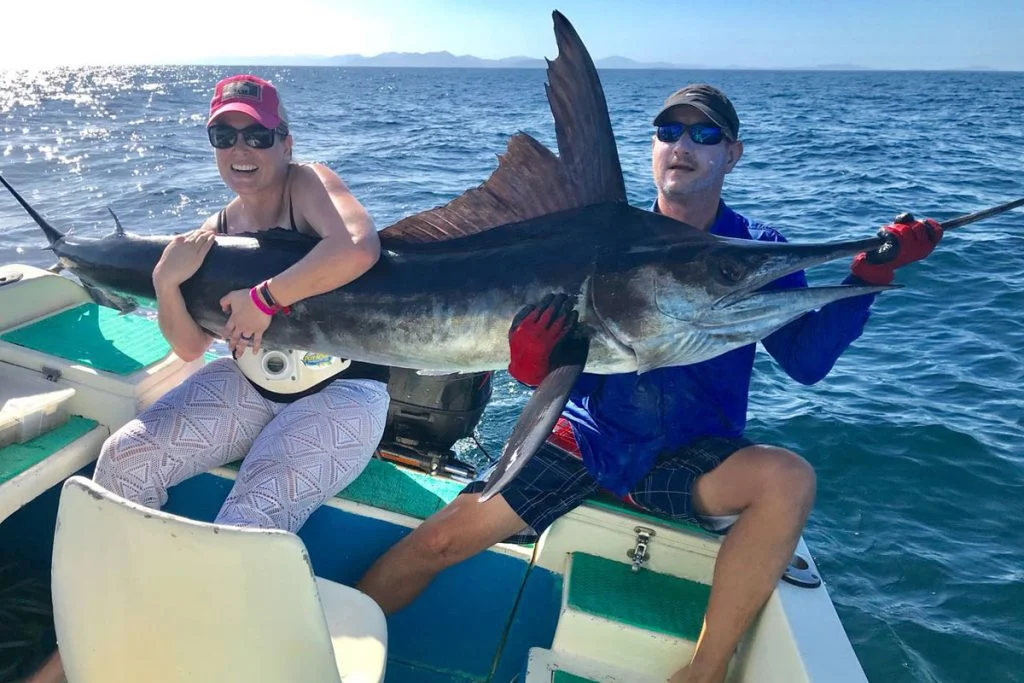
The signature fish of Papagayo. Pacific sailfish are acrobatic, aggressive, and plentiful here — more so than almost anywhere else in the world during peak season (December through April). They’re not the biggest fish in the ocean, but they fight like they are. A hooked sailfish will greyhound across the surface, bill shaking, and make multiple spectacular jumps before it’s done. Average size runs 80–120 lbs. Most are released.
Blue Marlin
The apex target. Blue marlin are the fish most anglers dream about and fewer actually catch. In Papagayo, the odds are meaningfully better than most Pacific destinations. They peak in spring (March through May) and again in fall. Blues here commonly run 200–400 lbs, with larger fish encountered every season. The fight is measured in time — expect 30 minutes to two hours depending on the fish. There’s nothing else like it.
Black Marlin
Less common but no less spectacular. Black marlin show up seasonally in smaller numbers. They’re heavier-bodied than blues and stubborn fighters. When one comes to the teaser and crushes the bait, everyone on the boat knows it immediately.
Yellowfin Tuna
Pound for pound, one of the hardest fighters in the ocean. Yellowfin tuna school in the blue water offshore and can be encountered in numbers that make for extraordinary days — hooked up on multiple rods simultaneously, fish running in every direction. They peak through the summer months (June–September) but are present year-round. Sizes typically run 20–80 lbs, with larger fish (called “cows”) appearing seasonally. They’re also excellent to eat, and the crew will fillet your catch for the trip home.
Dorado (Mahi-Mahi)
The fish that does everything. Dorado are electric blue and gold when they first come over the gunwale. They jump, they run, they shake their heads. They’re also one of the finest eating fish in the sea. Dorado are drawn to floating debris and weedlines offshore, and in peak season (July–August) you can find pods of dozens of fish. They grow fast and average 10–30 lbs in Papagayo, with bulls reaching 50+.
Wahoo
The sprint specialists. Wahoo are among the fastest fish in the ocean — their first run on a bait will strip line off the reel faster than almost anything else. They’re lean, torpedo-shaped, and deeply underrated by anglers who haven’t fought one. They appear seasonally in Papagayo, typically June through October.
Roosterfish
The inshore prize. Roosterfish are unique to the eastern Pacific and one of the most visually striking fish you’ll ever see — their namesake dorsal spines stand tall when they’re hunting. They’re found in the surf and along rocky points inside the gulf rather than offshore. Fighting a roosterfish in the shallows, watching it work a teaser along the beach, is one of the highlights of inshore fishing in Guanacaste.
Cubera Snapper
The reef heavyweight. Cubera snapper live around structure — rocky outcrops, ledges, seamounts — and they fight dirty. They’ll hit hard and immediately try to bury themselves in the rocks. They’re a favorite for live bait fishing along the reef zones and can reach impressive sizes (30–50+ lbs).
Most of our charters target multiple species in the same day — billfish offshore in the morning, inshore species on the way back. Ask your captain what’s running when you book and they’ll put together the right plan.