
There’s a moment on a marlin day — before the fish comes up, before the line goes tight — where the boat is quiet and the crew is watching the spread and everyone aboard knows they’re in the right water. Blue marlin fishing is the version of offshore fishing where the anticipation is part of the experience. The Gulf of Papagayo delivers that anticipation regularly. And when the bite comes, nothing else prepares you for it.
Blue Marlin in the Gulf of Papagayo
Blue marlin (Makaira nigricans) are apex predators of the open Pacific, and the waters off Guanacaste offer some of the best blue marlin fishing in the eastern Pacific Ocean. The deep offshore grounds — 25 to 60 miles from the dock at Papagayo — sit at productive depths for marlin, with the kind of temperature and current structure that concentrates the large baitfish that blues track year-round.
Blue marlin in Papagayo typically weigh 200–400 lbs. Fish over 500 lbs are encountered every season. The grander class — 1,000 lbs and above — has been caught in these waters. Our captains have put guests on marlin in this range, and while it’s never guaranteed, the Gulf’s productivity means those fish are genuinely reachable on any given offshore day.
When Blue Marlin Are Most Active
April through July is the primary blue marlin window in Papagayo. Water temperatures peak in spring, large baitfish schools move offshore, and marlin follow. May in particular is regarded by experienced Guanacaste captains as one of the most reliable months for trophy blue marlin — it’s when the biggest fish tend to appear and when hook-up rates are at their seasonal high.
October and November produce a secondary marlin window as fish push back through the area ahead of the dry season. Some of the largest individual fish of the year are landed in these months.
Blue marlin are present year-round in Papagayo’s offshore waters, including during dry season (December–March) when they appear alongside the peak sailfish bite. The difference is concentration: in peak season, you may see multiple marlin in a single day. In other months, encounters are more scattered.
How Marlin Are Caught
Trolling is the primary method — running a spread of skirted lures and rigged baits at 7–9 knots across the offshore grounds, covering water until a marlin comes up. Our captains use specific lure configurations and colors that have produced marlin in these waters consistently.
Live bait on circle hooks pitched to a raised marlin is the most effective method when a fish comes up on a lure and doesn’t commit. A live skipjack tuna — a bait that blue marlin can’t ignore — dropped back to a following fish converts a high percentage of raises into hookups.
Kite fishing suspends live bait at the surface in a way that mimics panicked prey. This technique is particularly effective for large individual fish that are working specific bait pods offshore.
The Fight
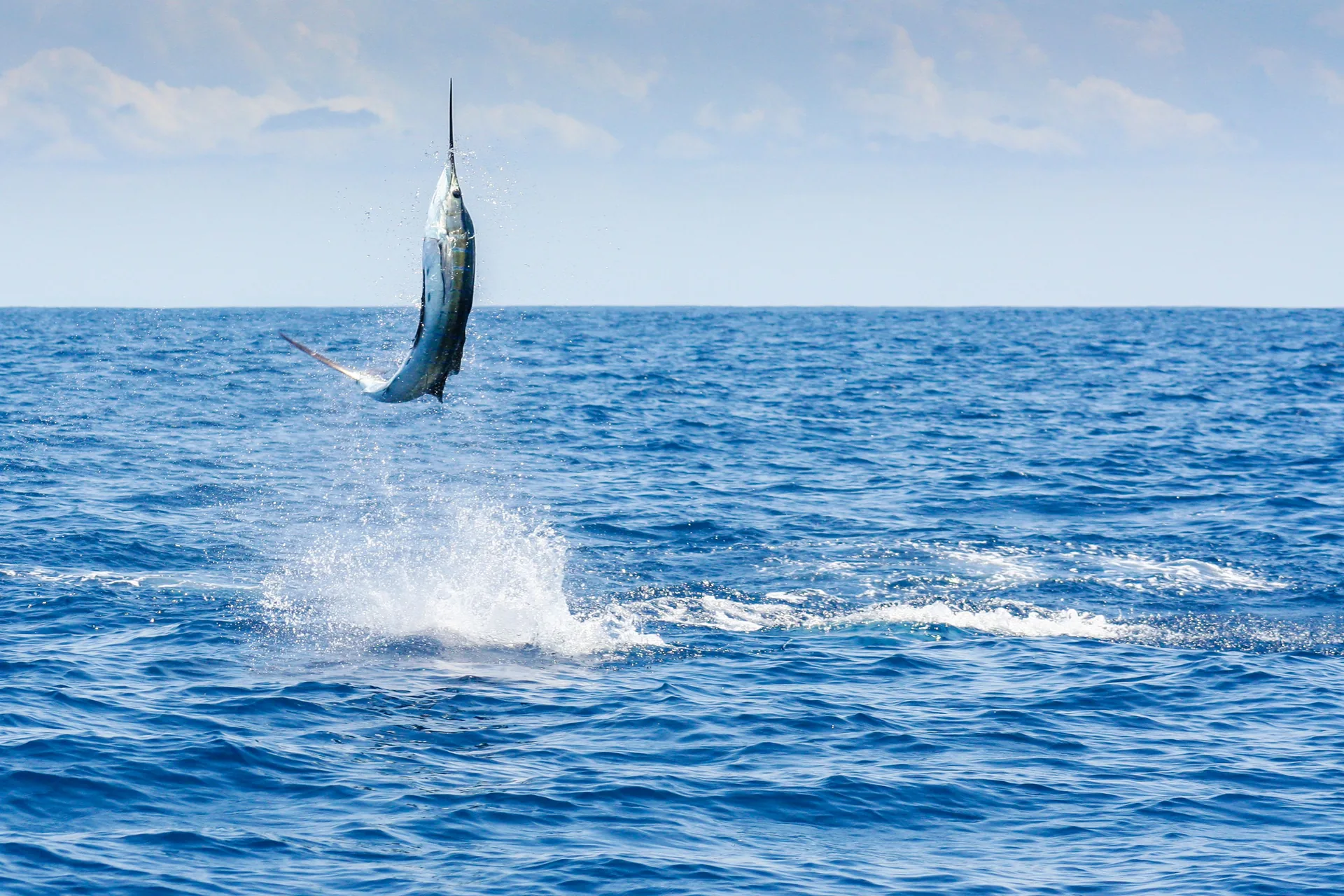
A hooked blue marlin is one of the most demanding physical experiences in sport fishing. The initial run can spool 300 yards of line in seconds. The fish typically jumps — those explosive, greyhounding leaps that are simultaneously beautiful and disorienting — then sounds and fights deep. A 300-lb blue marlin on stand-up 80-lb tackle is a 45-minute to two-hour engagement. Your back, arms, and legs will know about it the next day.
Some guests arrive in excellent physical condition and still find a large marlin fight genuinely challenging. That’s not a warning — it’s context. The difficulty is inseparable from the satisfaction.
All of our marlin fishing is done with catch-and-release protocols for blue marlin. Fish are fought to leader, identified, photographed, and released alive. Marlin are a protected species in Costa Rica’s waters, and our captains are committed to the science that keeps this fishery productive for future generations.
What to Expect on a Marlin Day
A marlin day isn’t like a tuna day or a dorado day. You may raise three marlin and land one. You may raise one and have a perfect day. The offshore conditions, the behavior of bait schools, and the fish themselves don’t follow a predictable script. What our captains bring is decades of experience reading these variables and positioning the boat where the probability is highest.
When it works — when a big blue comes up on the short rigger and the crew goes into motion and the line goes tight — you’ll understand exactly why people book this specific trip.
Blue marlin fishing in Papagayo is a serious undertaking that rewards guests who plan it properly. Talk to our captains about the best timing and which charter structure gives you the best shot.