
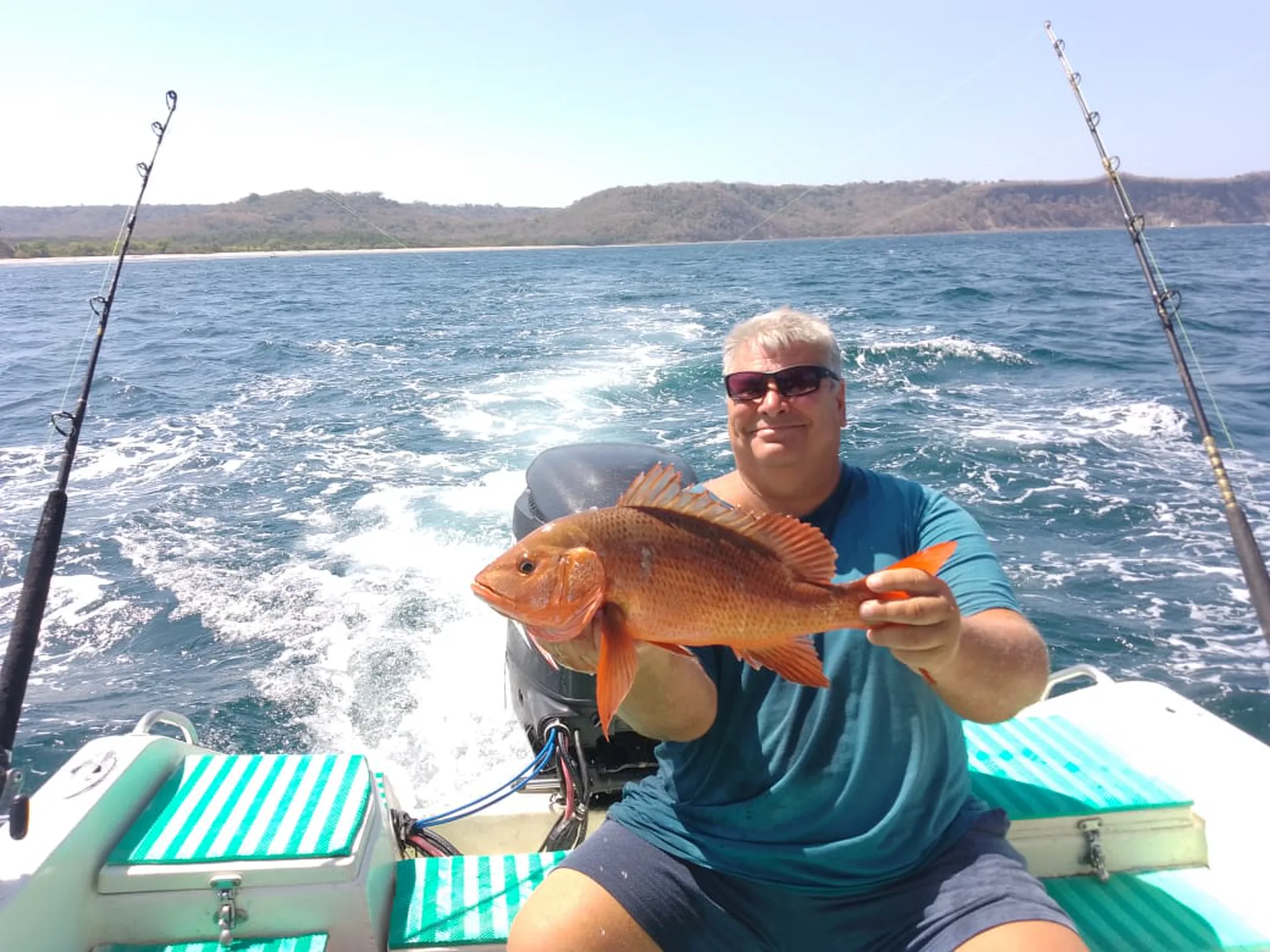
Not every fishing trip in Papagayo needs to be about billfish or tuna. Snapper are the backbone of inshore reef fishing along the Guanacaste coast — consistent, scrappy, and genuinely good to eat. Several species are found in fishable numbers year-round in the Gulf of Papagayo, which makes snapper a reliable target regardless of what season you’re visiting.
For guests who want action without the 30-mile offshore run, snapper fishing close to the Papagayo coast delivers it.
Snapper Species in Papagayo
The Gulf of Papagayo holds several snapper species, each with slightly different habitat preferences and peak seasons:
Cubera Snapper (Lutjanus cyanopterus) are the largest and most sought-after. Cubera run 5–60 lbs in this fishery, with fish over 40 lbs encountered regularly on deeper reef structure. They’re strong, structure-oriented fish that test heavier tackle. Cubera are primarily a wet-season species in Papagayo — June through October is peak time.
Pacific Dog Snapper (Lutjanus novemfasciatus) overlap habitat with cubera but tend toward shallower rocky structure. Dog snappers in Papagayo average 3–15 lbs with occasional larger fish. They’re available year-round and respond well to cut bait and jigs.
Red Snapper (Lutjanus peru — Pacific Red Snapper) are an offshore-reef species found at depth. They’re targeted on bottom-fishing drops in 100–200 feet of water and run 2–8 lbs on average, with larger fish in deeper structure.
Mullet Snapper and Amarillo Snapper are smaller reef species (1–4 lbs) found throughout the inshore zones. Both are excellent eating and are often caught as incidental species during mixed-bag bottom-fishing sessions.
Where Snapper Live in the Gulf
Snapper are structure fish — they hold on reef, rock, and hard bottom and rarely stray far. The Gulf of Papagayo has extensive rocky reef along the coastline and offshore of the peninsula’s headlands, which is what makes this area so productive for inshore fishing year-round.
Specific habitat types:
- Rocky reef at 40–120 feet — the primary zone for cubera and dog snapper
- Deeper structure at 150–250 feet — red snapper and other bottom species
- Nearshore ledges and points — where smaller species school in shallower water
- Areas around Playa del Coco and Ocotal — consistently productive inshore reef within a short run of the dock
Techniques
Bottom fishing with cut bait is the most effective and straightforward method. Chunks of mackerel, squid, or sardine fished on a high-low rig directly on the bottom put snapper in the cooler. This is a technique that works for all experience levels — the fish typically hook themselves when they commit.
Jigging with heavy vertical jigs (3–8 oz) in white, pink, or chartreuse is a more active approach that tends to target larger, more aggressive fish. Working a jig near the bottom over reef produces both snapper and other species like amberjack and grouper as incidental catches.
Live bait — sardines or small pinfish fished just off the bottom — triggers strikes from bigger cubera that ignore dead bait presentations.
Year-Round Reliability
One reason our captains include snapper in the afternoon portion of many longer charters is simple: they’re almost always biting. Tuna have seasons. Marlin have windows. Snapper are on the reef doing what they do twelve months a year, which makes them an important part of the Papagayo fishery even for guests focused primarily on offshore species.
On our Half Day Sport Fishing trip, inshore reef fishing — snapper, roosterfish, and tuna close to the coast — is the core focus. It’s also a regular part of the afternoon on the Full Day charter and the Fishing Trip, where we swing inshore after the offshore session.
Table Quality
Snapper is among the best-eating fish caught in Papagayo. The flesh is white, firm, and clean — excellent fried, grilled, baked, or as ceviche. Cubera in particular have a rich, meaty quality that stands up well to direct-heat preparations. Our crew will fillet and bag any snapper you want to keep.
Interested in building a charter around inshore reef fishing in Guanacaste? Get in touch and we’ll put together the right half-day or full-day around what’s producing on the reef.