
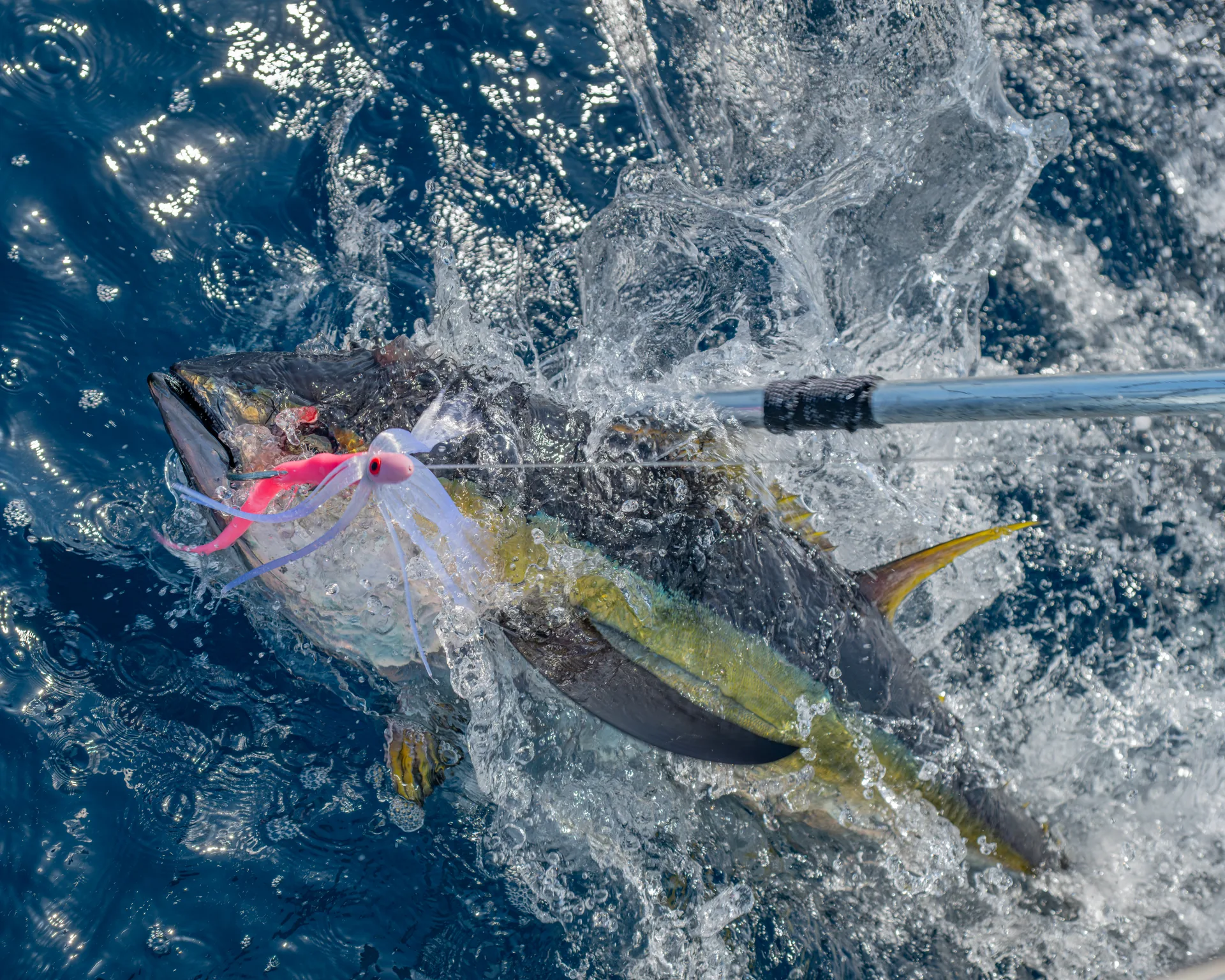
Ask any captain in Papagayo about summer fishing and you’ll hear the same answer: tuna. Yellowfin tuna (Thunnus albacares) descend on the Gulf in force from June through September, turning what the tourist brochures call “rainy season” into some of the most productive offshore fishing of the year. If you’ve never been on the water when a school of yellowfin shows itself — the surface breaking, birds diving, the sound of a hundred fish feeding — you’re missing one of the more visceral experiences this fishery offers.
Yellowfin Tuna in the Pacific
Yellowfin are highly migratory, following warm current systems and concentrations of baitfish across the open Pacific. The Gulf of Papagayo sits at a productive convergence: the Papagayo wind jet pushes cooler, nutrient-rich water up from depth during the dry season, and when those nutrients cycle through the food chain and the warm current returns in early summer, it creates the kind of bait-rich environment that holds large tuna schools for weeks.
Yellowfin in Papagayo typically run 40–120 lbs, with fish over 200 lbs encountered every season. The 80–100 lb class is common enough in peak summer that it’s rarely what the trip is remembered for — it’s the 150-plus-pounders that generate the stories.
When and Where
Peak season: June through September. July and August in particular see the heaviest tuna concentrations. The fish often appear well offshore — 25 to 50 miles out — which means a full-day charter is the right call for serious tuna hunting.
Tuna in Papagayo follow predictable conditions that experienced captains read well:
- Temperature breaks — the line where cool upwelled water meets warm surface current holds baitfish and, by extension, tuna
- Floating debris and weed lines — yellowfin often school under anything floating offshore; a patch of sargassum 30 miles out can be holding hundreds of fish underneath it
- Bird activity — frigate birds and boobies diving on the surface are a reliable indicator of a tuna school pushing bait to the top
Techniques
High-speed trolling with cedar plugs, jet heads, and large feathered lures raises tuna effectively and covers ground quickly when searching for schools.
Chunking — dropping cut baitfish off the stern while the boat drifts — is devastating when you’ve found a school holding in one spot. The bite can be explosive: multiple rods going off at once, fish running in different directions, controlled chaos on the deck.
Jigging with heavy metal jigs works exceptionally well on yellowfin that have sounded and won’t come back to the surface bite. Drop the jig to 80–150 feet and work it fast on the way up.
Live bait — skipjack tuna or big sardines — produces the largest fish. When conditions are right and you’re in the middle of a school, a live bait dropped on a circle hook is the most reliable method for hooking the biggest fish in the pack.
The Fight
Yellowfin are not subtle about what they do when hooked. The initial run is long, fast, and straight — they don’t jump, they just go. A 100-lb yellowfin on stand-up gear will test your legs and back within the first five minutes. The fish pump and run in cycles, peeling drag, diving back down every time you gain line. It’s not the acrobatics of a sailfish; it’s a different kind of physical contest. Most guests who’ve caught both say yellowfin are the harder fight pound for pound.
Which Charter to Book
Our Full Day Sport Fishing charter is the standard choice for yellowfin — you need the range and time to find and work a school properly. The Exclusive Tour runs five hours of professional sport fishing specifically targeting whatever is most active, and in summer that usually means tuna first.
If big tuna are your primary goal, let us know when you book and the captain will structure the day around the offshore grounds where schools have been most consistent in the weeks prior to your trip.
Questions about tuna season or what’s currently biting? Contact us and we’ll give you an honest report on what the Gulf of Papagayo is doing right now.